RICS Level 3 Home Survey
Formerly Building Survey – Our most comprehensive survey for older or unusual propertiesWhy Get a Home Survey?
There are many factors that determine whether purchasers decide to obtain a more detailed survey of the property they wish to purchase. For some it's about peace of mind knowing that a RICS qualified surveyor has inspected the property and for others it's about understanding the condition of the property they are buying and any issues they might face or have to plan to address.
We recommend undertaking a more detailed survey alongside your Mortgage Valuation so you understand more about the property's condition and the issues that may exist.
What Survey Options Are Available?
The RICS has defined more extensive levels of survey as Level 2 and Level 3 surveys. Surveyors undertaking these surveys have to conform to minimum standards when producing the survey to ensure common standards and a minimum level of expertise is applied.
A RICS Home Survey (Level 2 or 3) will identify the construction of each element, defects within that element and advise you what to do next and how urgent the repairs are likely to be.
RICS Home Surveys can be used to either renegotiate the agreed purchase price or highlight defects to the vendor that they may be prepared to rectify prior to sale.
Choosing the Right Home Survey
Sometimes it's difficult to know which is the right Home Survey for you. To help make this decision you can contact Farrow & Gould or take a look at the information provided by the RICS which will guide you through the decision making process.
Once you have decided we have provided more detail on the options available to you below.
Already Had a Mortgage Valuation?
Mortgage valuations are produced for the lender and not the buyer and will only report on property features that affect the banks' interest in the property. They do not provide detail about the condition of a property. It is also common for mortgage valuations to be completed with a desktop valuation or drive-by valuation without the surveyor entering the property.
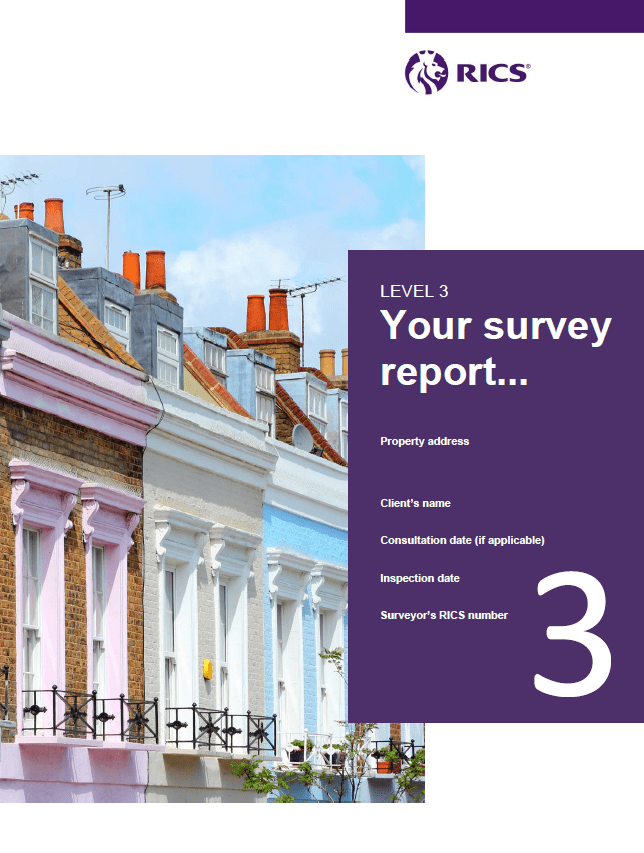
RICS Level 3 Home Survey with or without a Valuation
For pre-1850 properties, properties built with non-standard construction methods and buildings that require (or have undergone) major refurbishment or alterations, a Level 3 Home Survey may be more appropriate.
All our RICS surveyors are also RICS Registered Valuers so we can add Market Valuations to our surveys at significantly reduced rates as required.
Before you purchase your Home Survey we ask that you contact us to agree when we can undertake this survey. To purchase your Level 3 Home Survey with or without a separate valuation, please make an enquiry.
What does a RICS Level 3 Survey Include?
The RICS Home Survey – Level 3 includes:
- A thorough inspection of the property
- A detailed report based on the inspection
- Valuation (if requested)
- Access to the RICS detailed description of what is inspected
The Surveyor Aims to Help You:
What Does the Inspection Include?
The surveyor carefully and thoroughly inspects the inside and outside of the main building and all permanent outbuildings, recording the construction and defects that are evident. This inspection is intended to cover as much of the property as is physically accessible. Where this is not possible, an explanation is provided in the 'Limitations on the inspection' box in the relevant section of the report.
The surveyor does not force or open up the fabric of the building without occupier/owner consent, or if there is a risk of causing personal injury or damage. This includes taking up fitted carpets and fitted floor coverings or floorboards, moving heavy furniture, removing the contents of cupboards, roof spaces etc., removing secured panels and/or hatches or undoing electrical fittings.
If necessary, the surveyor carries out parts of the inspection when standing at ground level from adjoining public property where accessible. This means the extent of the inspection will depend on a range of individual circumstances at the time of inspection, and the surveyor judges each case on an individual basis.
The surveyor uses equipment such as a damp meter, binoculars and torch and uses a ladder for flat roofs and for hatches no more than 3m above level ground (outside) or floor surfaces (inside) if it is safe to do so.
If it is safe and reasonable to do so, the surveyor will enter the roof space and visually inspect the roof structure with attention paid to those parts vulnerable to deterioration and damage. Although thermal insulation is not moved, small corners should be lifted so its thickness and type, and the nature of underlying ceiling can be identified (if the surveyor considers it safe to do). The surveyor does not move stored goods or other contents.
The surveyor also carries out a desk-top study and makes verbal enquiries for information about matters affecting the property.